Radiation you can see,
in 3D, in real time.
RadLens-Tracer builds gamma-ray imaging instruments. RadLens C1 turns invisible radiation into a live three-dimensional image in about half a second, so you can see exactly where a source is — not just that one is somewhere nearby.
A Hanyang University spin-off, incorporated in Seoul in 2026.
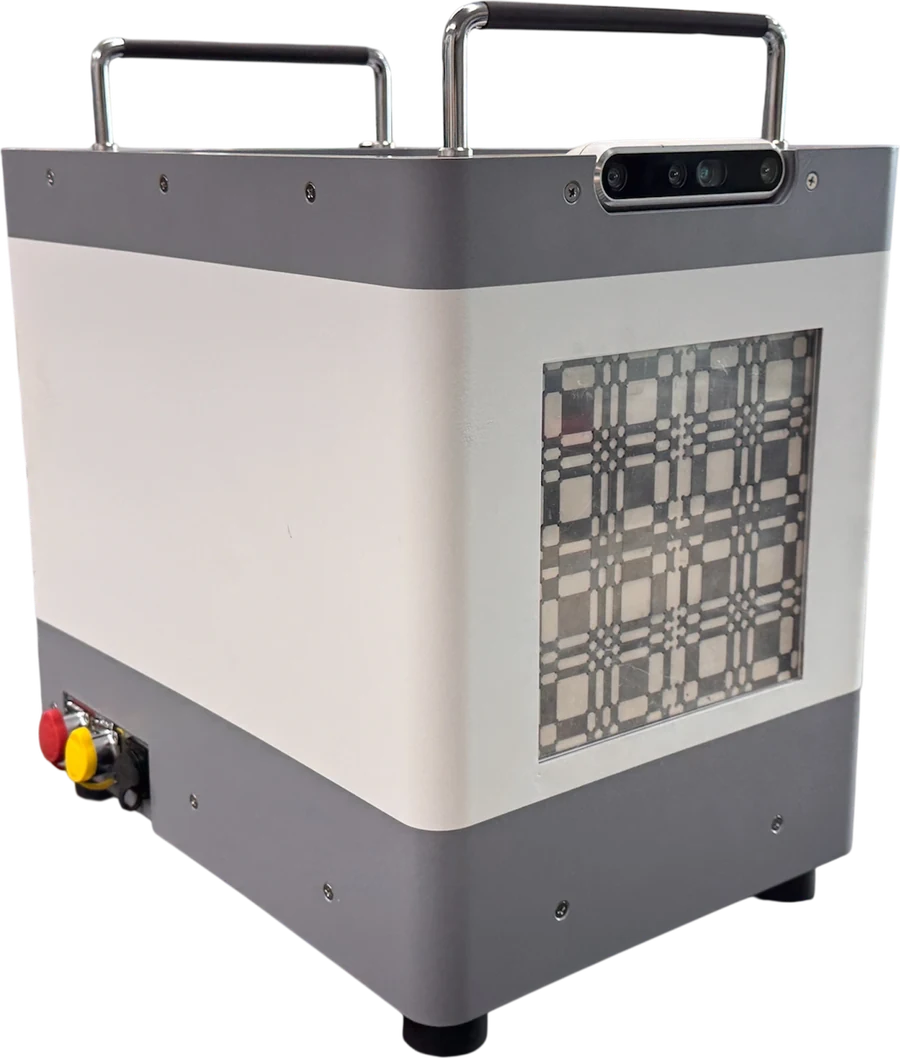
About us
RadLens-Tracer is an independent company commercialising two decades of radiation detection and Monte Carlo transport research. Everything we build answers one question: where did the radiation go? Three product lines come out of that work — one for security and nuclear sites, two for medicine.
RadLens C1
Real-time 3D Gamma Imaging
For customs and ports, nuclear operators and emergency responders.
More DetailsHuman Phantoms
& IR Dose Assessment
Personalised computational phantoms and staff dose assessment for interventional radiology.
More DetailsProton Therapy
Dose Verification
The dose a proton beam really delivered, checked against the treatment plan in real time.
More DetailsTechnology
How RadLens C1 turns individual photons into a picture of the room, with the source lit up on the object that carries it.
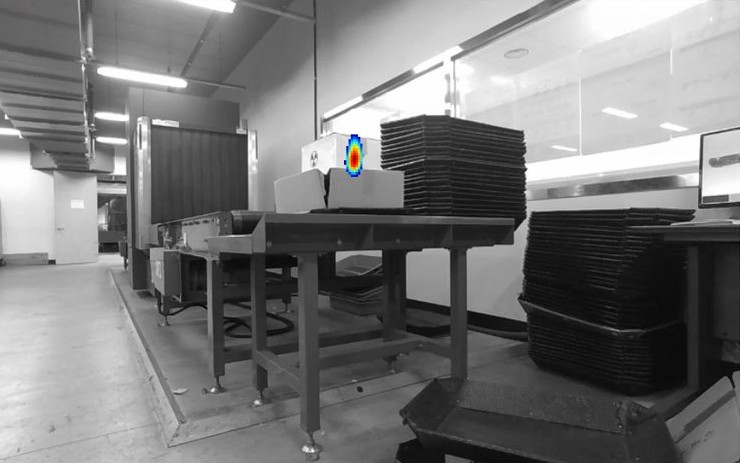
A live 3D image over the camera view
Gamma rays cannot be focused, so the image has to be inferred. RadLens C1 combines coded aperture and Compton reconstruction and draws the result over the live camera feed, with the energy spectrum and the identified isotopes alongside.
0.54 s ± 0.03 to a usable image (137Cs, 10 µCi at 1 m), where conventional gamma cameras need a minute or more.
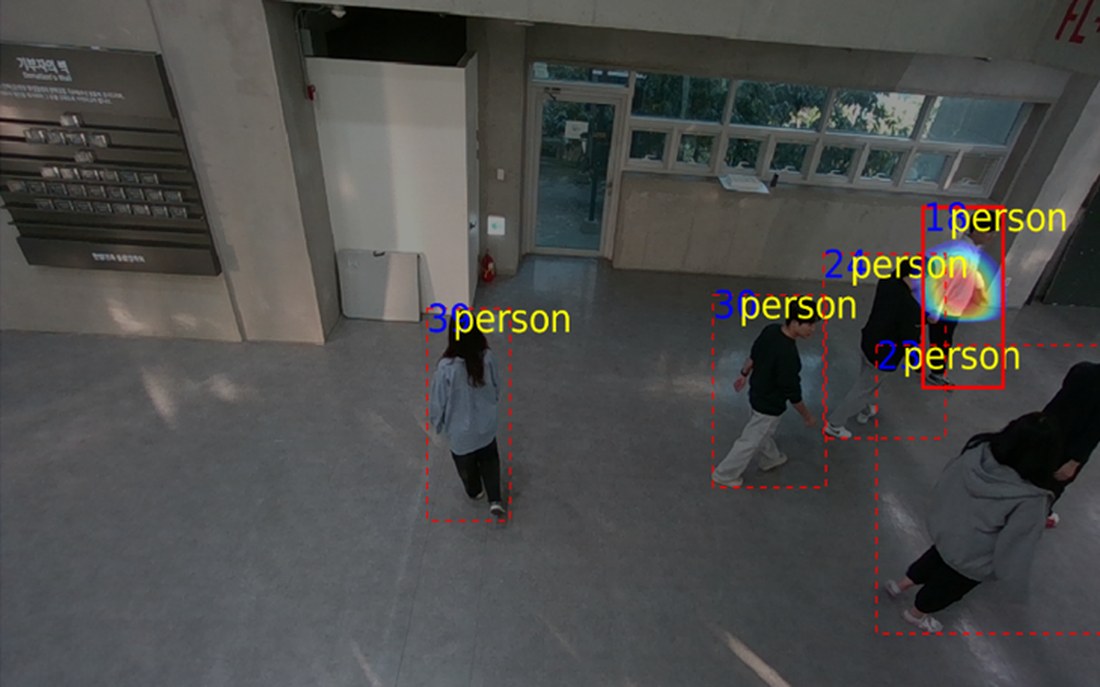
It finds who is carrying the source
Every person in view is detected and tracked. When the maximum of the radiation map falls inside one person’s bounding box, that box turns solid — that is the carrier. The others stay tracked, not flagged.
A drifting hotspot is ambiguous. A flagged person is something an officer can act on.
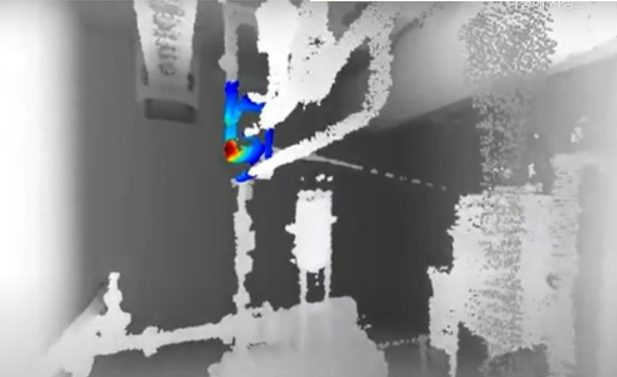
Depth turns a direction into a location
A depth camera on the same axis supplies the geometry of the room. The radiation distribution is registered to it, which turns an angle into a position on a real surface: which shelf, and how far in.
Milestones
Built on two decades of detector work, and validated outside the lab.
First order secured
Two RadLens C1 units for Incheon Main Customs, Korea Customs Service, for delivery in 2027.
Service contract with KHNP
Korea Hydro & Nuclear Power, the operator of Korea’s nuclear power fleet.
On-site evaluations completed
At Incheon Main Customs and the Korea Institute of Procurement, in working environments.
Proton therapy phantom studies
Completed at the Samsung Medical Center proton therapy centre, and demonstrated to Sumitomo Heavy Industries.
Six Korean patents and a PCT application
On the imaging method, activity estimation and the detector. See the list →
ICRP Publication 145
Our team developed the adult mesh-type reference phantoms adopted by the ICRP.
Government and accelerator backed
Lab-Specialised Startup Leading University Programme; RISE Global Accelerating Programme with SparkLabs.
Incorporated in Seoul, 2026
A Hanyang University spin-off with two co-founders. Exhibited at IAEA and APEC events.
Team
Two co-founders: one for the system, one for the physics.
Junyoung Lee
Ph.D. · Founder & CEO
Built high-speed gamma-ray imaging systems for ports, airports and bonded warehouses, from detector hardware to reconstruction and tracking software. Leads product and commercial work.
Chan Hyeong Kim
Ph.D. · Co-founder & CTO
Over twenty years in Compton imaging and radiation transport. Chairs ICRP Task Group 103. Originated the detector architecture and leads detector physics and reconstruction.
Recent activity
Exhibiting at Web Summit 2026, Lisbon
RadLens C1 will be shown in Lisbon. We are meeting operators, integrators and investors there.
First order from Incheon Main Customs
After on-site evaluations, two RadLens C1 units are secured for delivery in 2027.
RISE Global Accelerating Programme
Selected for the programme run with SparkLabs, alongside the national Lab-Specialised Startup Leading University Programme.
Let’s work together.
A live demonstration takes about fifteen minutes, at your site or ours.